不能说的秘密
书名:欺诈猎人|作者:笑无语|本书类别:古言|更新时间:18:54:41|字数:3896字
一 |
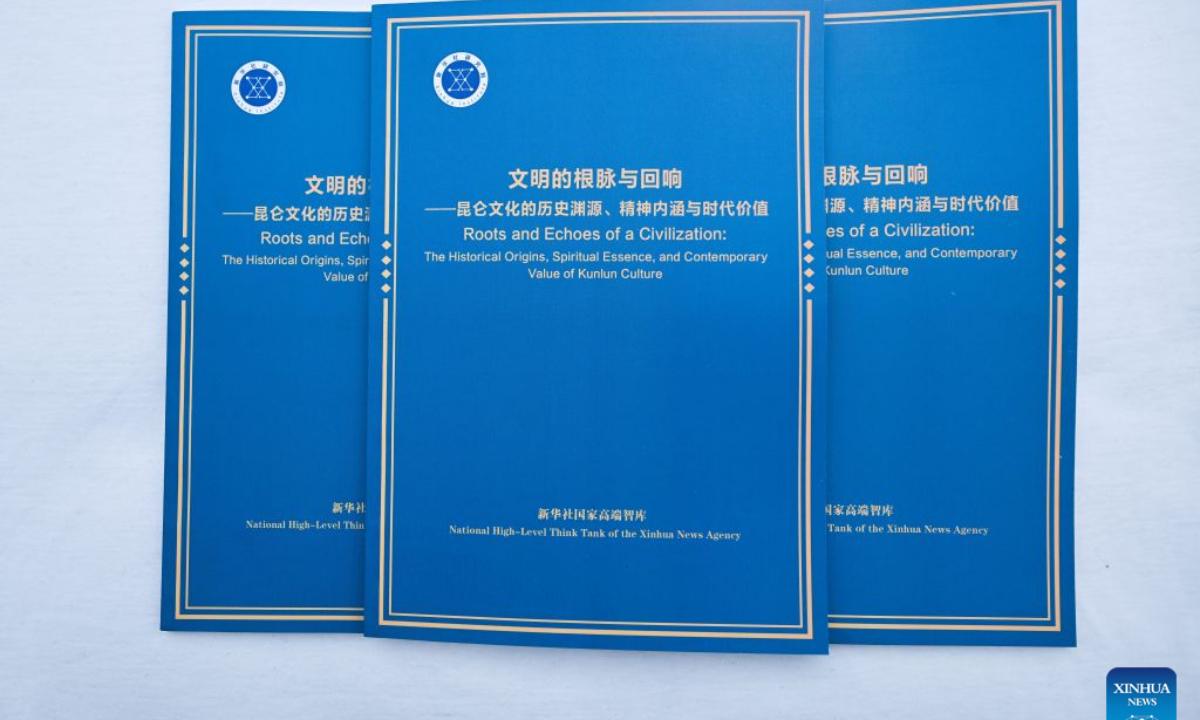
The National High-Level Think Tank of the Xinhua News Agency unveiled the Chinese and English versions of the report at the Kunlun Culture Forum in Xining, capital of northwest China's Qinghai Province.
The report describes Kunlun culture as an important origin of Chinese civilization and a vital spiritual emblem of the Chinese nation. It said the culture offers both theoretical and practical guidance for carrying forward fine traditional Chinese culture, forging a strong sense of community for the Chinese nation, and advancing exchanges and mutual learning among civilizations.
Stretching over 2,500 km across western China with an average elevation surpassing 5,000 meters, the towering Kunlun Mountains have long been revered as "the ancestor of all mountains and the source of all waters."
Drawing on archaeological evidence and historical records, the report said Kunlun culture carries the historical memory of shared origins and symbiosis among ethnic groups in three dimensions: the cosmic cognition of early Chinese people, the spiritual homeland of the Chinese nation, and the territorial symbol of ancient China. It also confirmed the unity in diversity and inclusiveness of Chinese civilization.
The report summarizes five core values of Kunlun culture: harmony between man and nature, great unity, vigorous self-improvement, cherishing life and caring for the people, and all under heaven as one family.
Rooted in millennia of cultural inheritance and ethnic integration, these values have shaped the cosmological view, the state view, the ethos of great resolve and perseverance, the people-centered view, and the worldview of Chinese civilization.
In the new era, Kunlun culture has undergone creative transformation and innovative development.
Local regions have tapped into Kunlun cultural resources and made coordinated efforts to advance cultural inheritance, ethnic unity, ecological conservation and industrial development, said the report.
Through initiatives such as themed study tours, folk performances, and integrated cultural and tourism development, the regions are achieving cultural inheritance, the continuity of national ethos, and the improvement of people's incomes and well-being.
"Exploring the wisdom embedded in Kunlun culture can provide a temperate yet profound Chinese approach to dissolving antagonism among civilizations and resolving development dilemmas," the report noted.
It added that the concepts of "harmony between man and nature" and "all under heaven as one family" in Kunlun culture offer precious oriental wisdom for resolving ecological challenges, civilizational estrangement, and geopolitical antagonism, and for advancing the building of a community with a shared future for humanity.
In Chinese mythology, Kunlun is a sacred peak where the Queen Mother of the West resides and where the Yellow Emperor, the cultural progenitor of the Chinese nation, built palaces to inaugurate the civilization of ritual and music.
At least nearly 20 ethnic groups, including the Qiang, Yi, Jingpo and Pumi, trace their ancestry to the foot of the Kunlun Mountains. Since modern times, Kunlun has been a spiritual homeland for the Chinese, often eulogized to invigorate the national spirit in times of national peril.
。 2025 2024 2026 HAPPY NEW YEAR 庆元旦 迎新年 亲爱的小朋友们、家长们: 新年新气象,欢乐不打烊! 伴随着小朋友们的欢声笑语,2024年即将结束,我们迎来了充满希望的2025年!在这个辞旧迎新的美好时刻,郑州市中原区汝河新区第二幼儿园全体教职工向大家致以最诚挚的新年祝福,感谢大家对我们各项工作的理解与支持! 元旦节放假通知 新 年 快 乐 一 二 三 四 五 六 日 30 二九天 31 初一 1 放假 2 初三 3 初四 4 初五 5 小寒 根据国务院放假通知,现将我园2025年元旦放假安排通知如下: 1 放假时间 2025年1月1日(星期三) 2 返园时间 2025年1月2日 (星期四) 元旦习俗知道多少 新 年 快 乐 元旦节 · 祭先祖 元旦的第一件事就是祭祀祖先汉族人年节祭祀祖先的习俗,表现了中国人慎终追远、百善孝为先的传统美德。 元旦节 · 吃饺子 吃饺子的习俗在我国明清时期已经十分盛行,水饺的“饺”与“交”同音,因此,在新年吃饺子寓意在两年之交时交上好运。同时由于水饺的形状跟元宝有点像,因此,元旦吃水饺也寓意着新的一年能够招财进宝、财源滚滚。

二 | 元旦节 · 吃汤圆 我国一直有着“北方吃饺子,南方吃汤圆”的习俗,但现在节日吃汤圆已经不是南方专属。元旦吃什么寓意好,元旦吃汤圆当仁不让。汤圆寓意“团团圆圆”,家的概念自古至今都占据重要地位,那么元旦吃汤圆也是在新的一年为整个家庭许下美好的愿望。 元旦节 · 扫尘 在元旦当天要扫尘迎新。老一辈人常常告诫我们:“财不入脏门。”财神爷,在中国传统文化中,是财富与福气的象征。这一习俗寄托着人们破旧立新的愿望和辞旧迎新的祈求。 元旦节 · 拨白 古代养生家认为在元旦这一天沐浴拔白可以消除罪障、洗去一身污秽、迎接吉祥如意。 元旦节 · 饮屠苏 相传屠苏酒为华佗所创,由孙思邈发扬光大,被认为可以预防瘟疫,通常由年少者先饮,这种饮酒顺序也使其在古人心中留下了深刻的印象。 元旦节 · 放鞭炮 根据传统的民间传说,元旦放鞭炮是为了驱逐“山魈”元旦放鞭炮满地的红色代表喜庆、幸福、吉祥。 元旦节 · 吃团圆饭 中国人重视家庭亲情。

三 | 在这个辞旧迎新的喜庆时刻,家人团聚分享美食与快乐,一起迎接新的一年。

四 | 假期温馨提示 新 年 快 乐 卫生保健 元旦假期正值冬季,是传染病高发季节,家长应时刻注意幼儿的身体健康,认真做好传染病的预防工作。

五 | 1.传染病预防 近期支原体肺炎、流行性感冒等呼吸道感染性疾病高发,同时加强诺如病毒、手足口病等流行病的预防工作,元旦假期期间尽量避免带孩子去人流较多、空气污浊的公共场所,出入公众场合正确佩戴口罩,保持社交安全距离,以免交叉感染。 2.勤洗手 在公众场合不要用手到处乱摸,家长要和幼儿一起勤洗手,正确使用“七步洗手法”,饭前和外出游戏玩耍回家后,记得要先把小手洗干净,减少细菌的传播。 3.室内勤通风 保持室内空气流通是预防传染病的有效方式,空气质量达标时,保证每天不少于30分钟开窗通风时间。 饮食安全 假期里要合理安排饮食,注意营养平衡和饮食卫生。 1、杜绝孩子暴饮暴食 孩子在假期吃了比平常多数倍的食物,很容易造成急性胃扩张,加重胃肠负担,导致消化吸收不良,损害肠胃。 2、拒绝不健康的食物 不吃半生不熟的食物、染有色素的食品等。不干净或变质的食品,很容易引发急性胃炎或胃肠炎。 交通安全 1.守规则,树榜样。家长要时刻严格遵守交通规则,“红灯停,绿灯行”,为孩子树立良好的学习榜样。 2.小细节,保安全。

六 | 乘坐私家车,幼儿应坐安全座椅,系好安全带。不要坐在副驾驶位置或由成人抱坐,车子在行进时锁好车门车窗,不将孩子单独滞留车内。 3.讲文明,促和谐。不管是乘坐公共交通工具还是自驾出行,均要文明守礼,自觉排队,礼让行人,走文明路,开文明车,做文明市民,文明宝贝。 4.重教育,防隐患。教育幼儿不在马路上玩耍、嬉闹、溜旱冰、玩滑板车和骑自行车,不要翻越马路中央的安全护栏和隔离墩。 居家安全 1.切实履行监护责任,不要留孩子独自在家,告诉宝宝不要随意给陌生人开门。 2.教育幼儿不能攀爬阳台、窗户等高处危险的地方,防止坠落。 3.告诉幼儿不能从阳台或窗户往楼下扔东西。 4.家用电器一定收拾妥善,不让幼儿随意触碰,防止孩子一时好奇,将手指或其他物品塞进插孔内,破坏插孔的同时威胁生命。 5.妥善放置打火机、刀具等危险用品;药物、洗涤用品放置在孩子拿不到的地方,防止孩子当糖果误食。 6.教导孩子学会报警方法,牢记家庭住址。 亲子活动 家长可以利用假期时间,与孩子一起进行亲子活动,增进亲子关系,培养孩子的兴趣爱好。

七 | 同时,这也是一个难得的与孩子共度美好时光的机会,让我们共同创造更多温馨的家庭回忆。

八 | 每一年的元旦,都是一个全新的开始。 假期不长,趁着不忙多一些亲子的用心陪伴, 这是给孩子最有意义的假期。

九 | 在这新旧交替之际, 幼儿园全体教职工, 祝大家身体健康,新年快乐,阖家幸福! 编辑 / 吕方慧 审核 / 张 猛 润德 喜阅 乐动 向美 勤劳。

十 |


